Parameter
-
Pile composition
-
Backings
-
Fire classification
-
Static propensity
-
Chair resistance
-
VOC / IAQ
-
Acoustics
We supply materials only for B2B customers (distributors, contractors, developers, architects, FM). Installation is by your appointed contractor/installer.
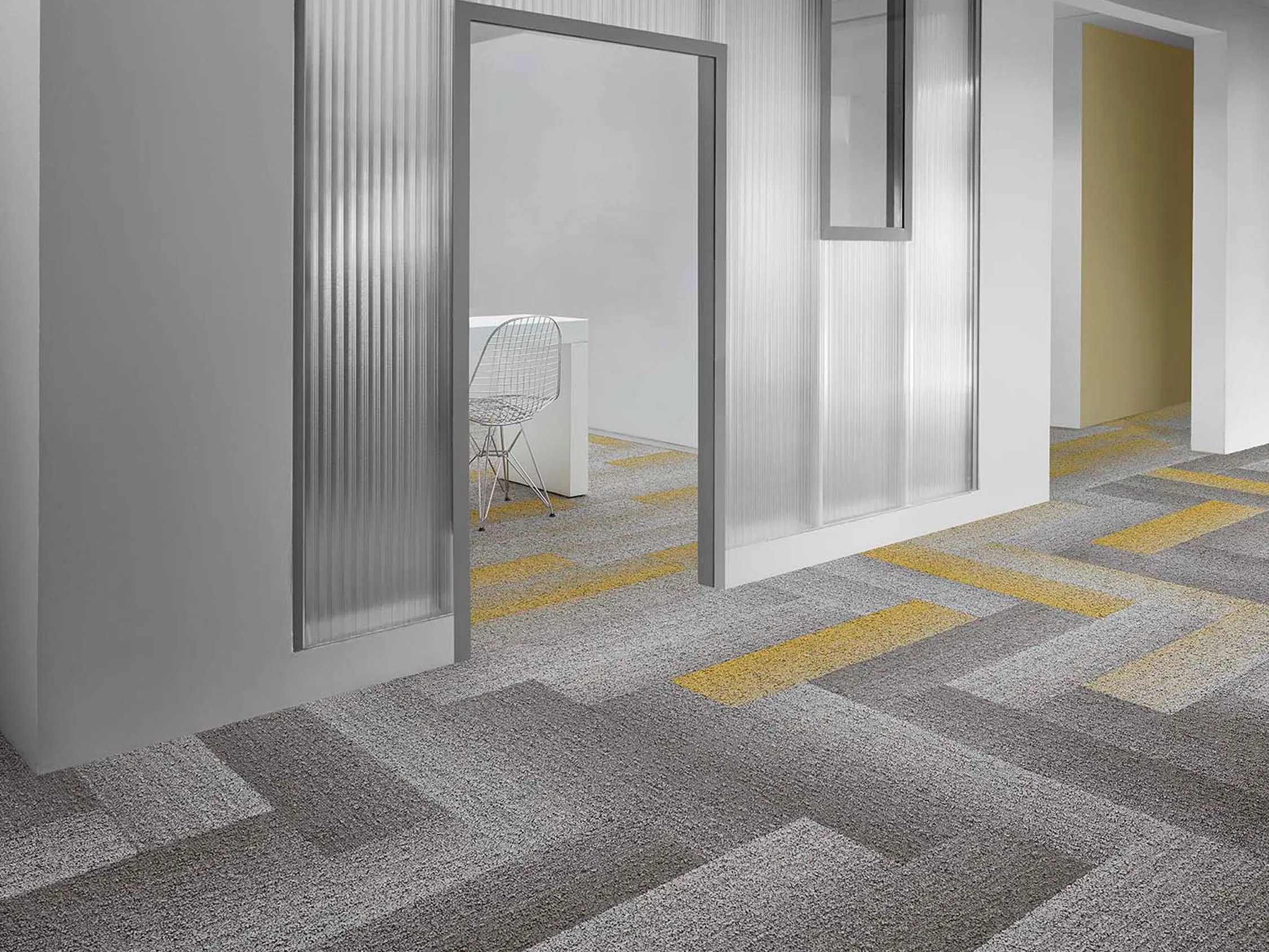
Carpet tiles deliver modular flexibility, fast replacement and strong acoustic performance, making them ideal for offices, education, hospitality back-of-house, libraries, coworking and conference spaces.
Tile-by-tile replacement: swap damaged tiles without full-area disruption, reducing downtime and OPEX.
Design freedom: zoning, wayfinding, checkerboards, plank patterns (25×100, 50×100), herringbone and borders.
Access floors friendly: easy lift-and-replace over raised floors and underfloor services.
Acoustic & comfort: option for cushion/HD backings that improve impact sound and footfall comfort.
Low emissions: low-VOC options; documentation available for submittals.
Confirm exact values on the selected line’s datasheet/DoP/EPD. Samples available on request.
Pile composition
Backings
Fire classification
Static propensity
Chair resistance
VOC / IAQ
Acoustics
Solution-dyed nylon (PA) is common; project-specific alternatives available
Bitumen, PVC-free, cushion/HD composite, recycled content options
Typically Cfl-s1 (verify DoP/test per SKU)
Anti-static options for office IT environments
Castor-chair suitable lines (verify EN/ISO test)
Low VOC; indoor air labels on request
Impact sound & absorption (dB/αw per datasheet); cushion backings elevate performance
Plank patterns: 25×100 herringbone/ashlar for dynamic corridors; mix planks with 50×50 fields for zoning.
Directional vs non-directional: choose non-directional tiles to minimize waste and speed installation.
Colour blocking: use accent colours for wayfinding and meeting zones.
Edge transitions: coordinate with Stairs solution and thresholds to adjacent hard floors.
Rugs-on-tiles: define collaboration islands with different textures/piles without extra rugs.
Replacement
Acoustic
Design flexibility
Access floors
Corridor aesthetics
Maintenance downtime
Typical use
Tile-by-tile
High (cushion backings)
Very high (mix, rotate, plank)
Excellent
Good
Low
Offices, education, conference
Patch/cut and seam
High
High (continuous look)
Medium
Excellent seamless
Medium
Hospitality corridors/rooms
Plank-by-plank
Medium–Good (with underlay)
High (wood/stone looks)
Excellent
Excellent
Low
Receptions, kitchens, amenities
Subfloor prep: ensure flatness and moisture are within limits; prime as required.
Adhesives & tackifiers: use the recommended tackifier for lift-and-replace; observe open times and RH/temperature.
Seam & pattern alignment: plan arrow/dye-lot orientation; confirm batch control during install.
Castor areas: specify chair-rated tiles and backing systems; consider chair mats where appropriate.
Recycled content backings available; enquire about take-back and recycling programs.
Low-VOC and EPD/LCA documentation supports green building submissions.
Lifecycle value: lower OPEX due to quick spot replacement and modular maintenance.
Materials-only supply. Fitting by your contractor/installer.
cartons to palletized bulk; MOQs vary by design/backing.
stock vs made-to-order (colourways, backing type).
datasheets, DoP/DoC, fire/TVOC tests, EPD/LCA on request.
tile sets, colour boards; mock-up layouts upon request.
spec text, take-offs, maintenance guides.
Here you’ll find answers to the most common questions our customers ask when choosing flooring. This section is designed to help you make confident and informed decisions. If you don’t see the information you’re looking for, feel free to contact our support team — we’re always here to help.
Cushion improves acoustics and comfort; PVC-free helps with emissions/circular goals; bitumen offers robust value.
Yes—select castor-rated tiles/backings and follow the maintenance guide; chair mats can further reduce wear.
Choose solution-dyed nylon piles and follow scheduled cleaning; keep attic stock for quick swaps of stained tiles.
Absolutely—combine 50×50 with 25×100 planks, alternate textures, and use accents for wayfinding.
No—materials only. Installation by your appointed contractor.