Parameter
-
Slip resistance
-
Visibility/contrast
-
Fire performance
-
Materials
-
Edge geometry
-
Fixing
-
VOC
We supply materials only to B2B clients (distributors, contractors, developers, architects, FM). Installation is performed by your appointed contractor/installer per local code and manufacturer guidance.
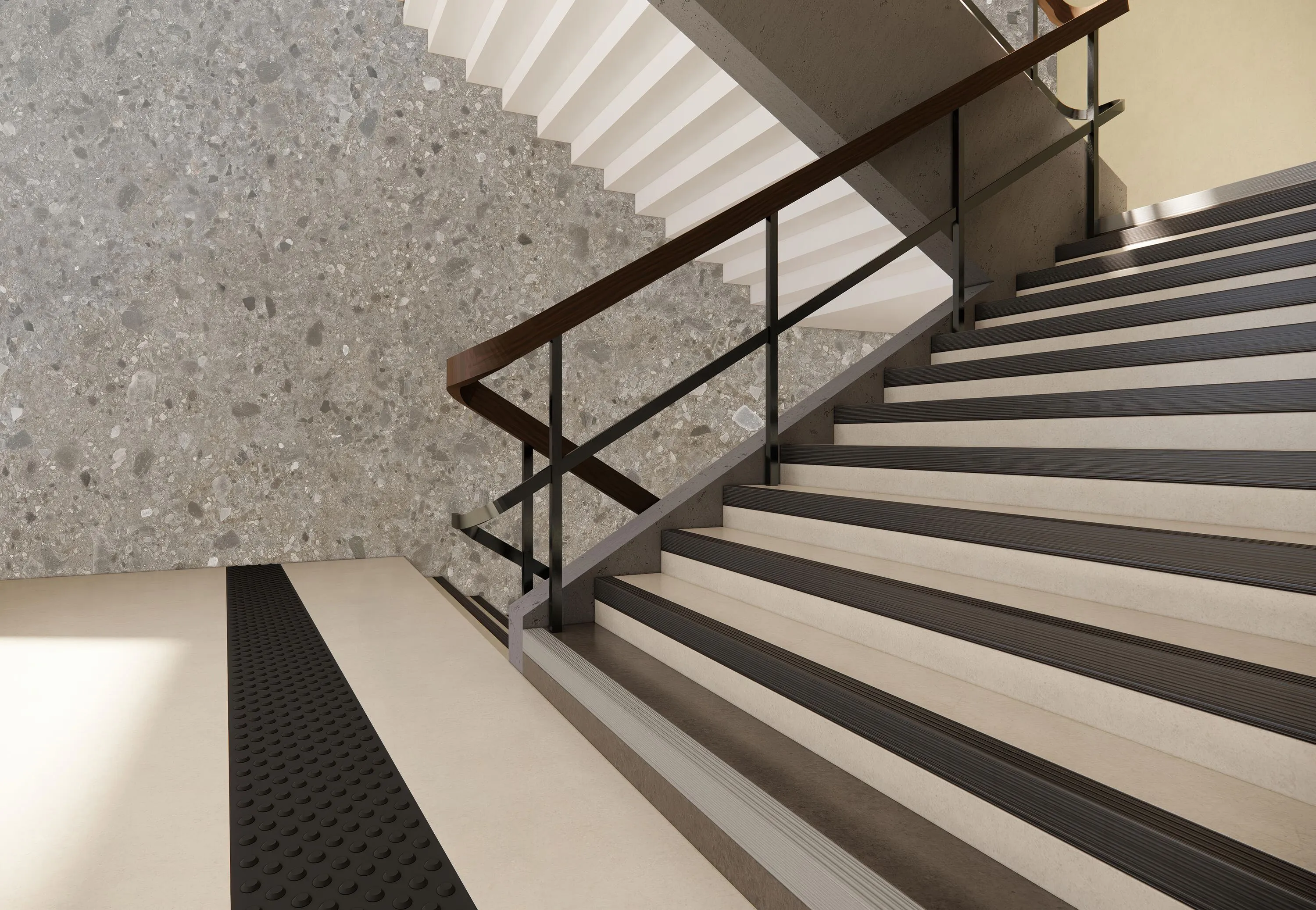
Stair Solutions cover nosings, treads, riser/landing finishes and contrast strips designed to improve slip resistance, edge visibility and durability on internal stairways. Systems are suitable for offices, education, healthcare, hospitality, residential developments and public buildings.
Slip resistance where it matters: textured anti‑slip inserts on nosings and treads for wet/dry interior use.
Edge visibility & contrast: integrated high‑contrast strips to highlight nosing lines and reduce trip risk.
Durability under traffic: profiles engineered for heavy footfall, trolleys on landings and regular cleaning.
Compatibility: pairs with vinyl, linoleum, LVT/SPC, laminate and wood floor finishes.
Maintenance & hygiene: replaceable inserts; smooth, cleanable surfaces; low‑VOC options.
Compliance support: designed to assist with accessibility and safety requirements (confirm local code specifics).
Stair Nosings (profiles): single‑ or double‑channel with anti‑slip inserts; square‑edge or rake‑back front.
Treads: factory‑bonded anti‑slip tread plates for worn steps or substrate upgrades.
Contrast Strips: integrated or surface‑applied strips to meet visual contrast guidance.
Landings/Edges: coordinating edge trims and transition profiles for top/bottom steps.
Accessories: corner pieces, end caps, screws/adhesives specified per substrate (by installer).
Always verify local building code/accessibility requirements (e.g., contrast width/position, tactile cues) for the project jurisdiction.
Slip resistance
Visibility/contrast
Fire performance
Materials
Edge geometry
Fixing
VOC
Target R‑rating selection for approach zones; stair inserts with wet/dry grip (verify test)
Achieve clear luminance contrast between nosing and tread/riser (confirm local code)
Components typically Bfl‑s1 or substrate‑dependent (verify DoP/test)
Aluminum profiles with anti‑slip inserts, or resilient vinyl/rubber treads
Square/splayed front edges; nosing radius options for different finishes
Mechanical + adhesive systems per substrate (concrete/wood/metal)
Low‑VOC; confirm certificates where required
Finish compatibility: coordinate nosing height with the finished floor build‑up (flooring + adhesive/underlay).
First/last step emphasis: apply contrast strips at landings and the first/last risers to improve perception.
Tactile cues: add tactile indicators at the head/top of stairs where local code requires.
Cleaning: prefer inserts that resist clogging and allow easy wipe/brush maintenance.
Noise & comfort: consider resilient inserts in quiet zones (education, healthcare).
Materials‑only supply. Installation by your contractor/installer to local code.
from step kits to bulk palletized nosings/treads.
stock finishes vs made‑to‑order inserts/colors.
datasheets, DoP/DoC, slip/fire tests, installation guides.
profile cuttings, insert swatches.
spec wording, take‑offs from drawings, maintenance guidance.
Here you’ll find answers to the most common questions our customers ask when choosing flooring. This section is designed to help you make confident and informed decisions. If you don’t see the information you’re looking for, feel free to contact our support team — we’re always here to help.
Select inserts with proven wet/dry slip performance and match the R‑rating/pendulum guidance required by your local code.
Use high‑contrast strips across the nosing width; verify luminance contrast thresholds per accessibility standards.
Yes — choose profile geometry that suits the finished floor thickness and front edge shape; follow adhesive/fastener guidance.
Many systems offer replaceable inserts; confirm the insert channel type and replacement process in the datasheet.
No — materials only. Installation is performed by your appointed contractor/installer.