Criterion
-
Moisture resistance
-
Dimensional stability
-
Underfoot comfort
-
Acoustic performance
-
Renovation speed
-
Rolling loads
-
Subfloor tolerance
-
Wetrooms
-
Typical use
We supply materials only to trade. Installation is handled by your appointed contractor/installer.
SPC (Stone Plastic Composite) is a rigid‑core vinyl plank/tile with a mineral‑filled core that delivers exceptional dimensional stability and waterproof performance. It shines in renovations, areas with temperature variation, and occupied‑space fit‑outs where speed and minimal downtime matter.
Dimensional stability: rigid core resists thermal expansion better than flexible LVT.
Waterproof build: suitable for kitchens and high‑moisture usage (not for showers/wetrooms).
Fast install: click floating systems reduce disruption; ideal for after‑hours or phased works.
Easy replacement: plank‑by‑plank swaps with minimal trades overlap.
Low VOC: options available; request certificates for submittals.
Design continuity: wood/stone visuals coordinate across zones.
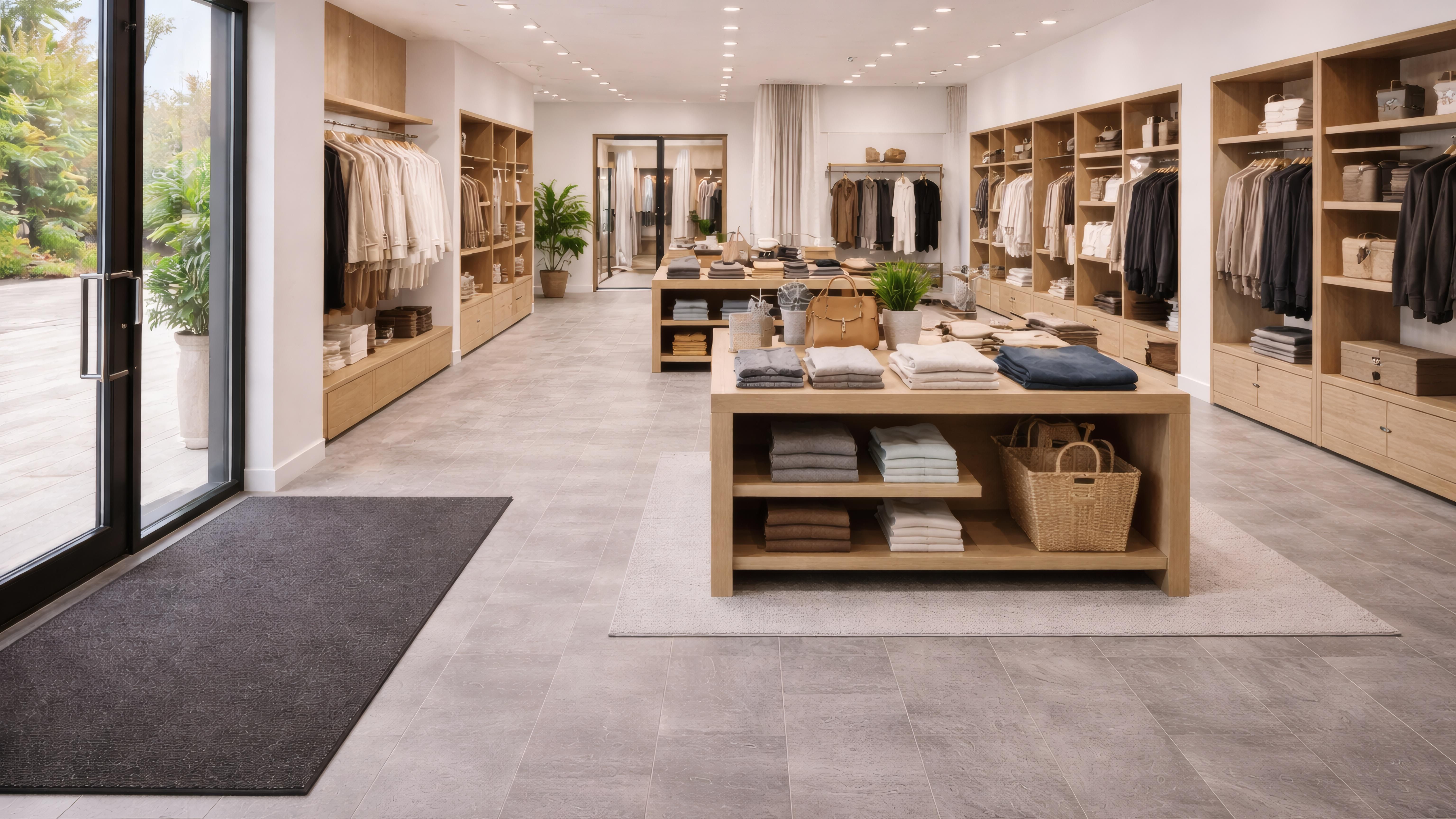
Retail & Entrances: tolerates thermal swings near shopfront glazing; quick overnight installs.
Office & MFH Renovations: click systems minimize downtime; excellent for tenant improvements.
Education & Hospitality: corridors, rooms, amenities with frequent cleaning.
Back‑of‑House: select higher wear layers for trolley traffic.
Moisture resistance
Dimensional stability
Underfoot comfort
Acoustic performance
Renovation speed
Rolling loads
Subfloor tolerance
Wetrooms
Typical use
Very high (waterproof core)
Excellent
Medium
Medium (needs underlay)
High (click)
Good (check collection)
Higher (minor deviations)
No (use wetroom sheet systems)
Retail, corridors, kitchens, MFH
High
Good
High (with underlay)
Good (with underlay)
High (click) / Medium (glue)
Glue‑down best
Lower (needs prep)
No (use wetroom sheet systems)
Offices, retail, MFH
Medium
Medium
Medium
Medium
High
Medium
Medium
No
Residential/light commercial
Construction: multi‑layer with rigid mineral‑filled core, wear layer, decor film, backing.
Wear layers: typically 0.3–0.7 mm; choose ≥0.55 mm for heavy traffic.
Total thickness: usually 4.0–6.5 mm (system‑dependent).
Installation: click floating (most common); confirm underlay type (acoustic/IXPE).
Use classes: 33–34 commercial; selected ranges 41–43.
Fire performance: often Bfl‑s1 (verify DoP).
Slip: R9–R10; safety floors (R10–R12) are separate systems.
Indoor air: low VOC options.
Thermal limits: wider tolerance vs LVT; still follow expansion joint rules and sunlight management.
stable click edges; micro‑bevels for realism.
specify acoustic underlay (where required) compatible with rigid cores and rolling loads.
plan for door thresholds and stair edges with the Stairs solution range.
consider solar gain; use shading or matting to control surface temperature.
Tolerance: SPC tolerates minor subfloor irregularities, but follow flatness specs to avoid joint stress.
Moisture: test per standards; use appropriate vapor barriers where required.
Click assembly: respect locking angle and manufacturer guidance; stagger joints appropriately.
Heavy rolling loads: in load‑intensive zones, evaluate glue‑down LVT as an alternative.
Materials‑only supply. Installation is by your installer/contractor.
cartons to bulk pallets.
stock vs made‑to‑order by décor.
datasheets, DoP/DoC, fire/slip tests, EPD/LCA on request.
planks/tiles, finish boards.
assistance with spec wording and maintenance plans.
Here you’ll find answers to the most common questions our customers ask when choosing flooring. This section is designed to help you make confident and informed decisions. If you don’t see the information you’re looking for, feel free to contact our support team — we’re always here to help.
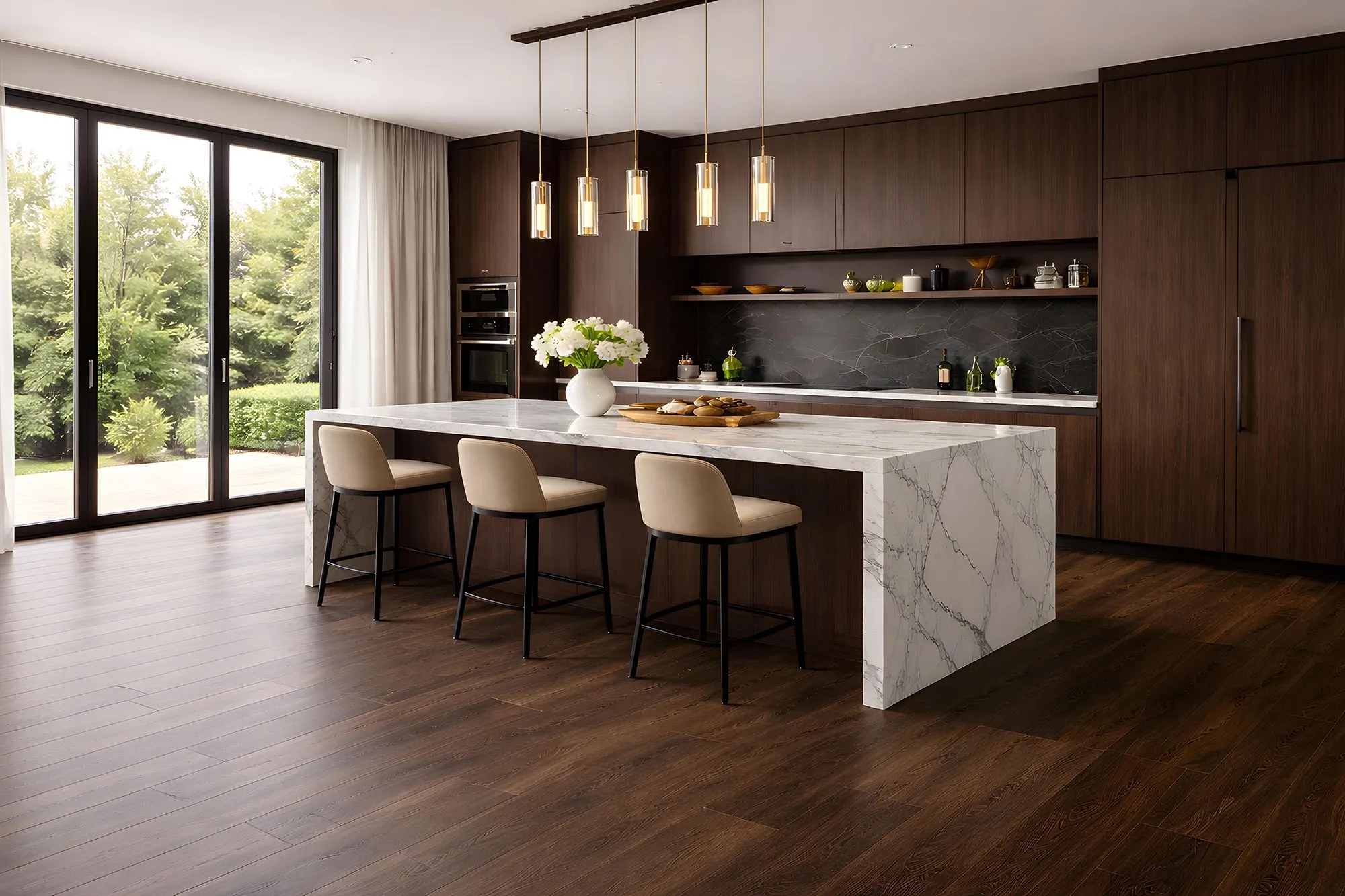
Yes — SPC’s waterproof core and rigid stability make it a strong choice for kitchens and corridors (not for wetrooms).
Rigid core improves stability vs LVT; still manage solar gain and respect expansion joints near glazing.
Often yes, if flatness and moisture are within limits. Otherwise remove/prepare the substrate.
Comfort is medium; pair with acoustic underlay if higher comfort/dB reduction is required.
Evaluate glue‑down LVT; while SPC is robust, bonded systems often perform better for intensive rolling traffic.